Team retention platform
See burnout coming.
Weeks before it lands.
Your team plays for two or three minutes a day. You get four honest indicators of how they are holding up — without a survey, and without watching a single person.
15 minutes · run on your own team scenario · live in a couple of days

Today · Sales team, 8 people
Aggregates only. No individual answer is ever shown here.
The quarterly survey is a photograph of a month that already ended.
A quarterly survey shows you the past.
A daily signal shows you the room you are standing in.
Everyone hates the quarterly pulse. People answer the way they are supposed to, HR receives an averaged fiction, and you find out your strongest engineer was burning out on the day they hand in their notice.
The problem is not the questions. It is the instrument. Asking someone directly how they are doing at work is one of the most reliably distorted measurements in social science — and asking once a quarter compounds it.
Level Game measures behaviour instead of opinion, every day, in a two-minute game people actually want to open.
3–10
salaries
is what it costs to replace one specialist who leaves — the hiring, the ramp-up, and the pace the team loses in between.
-
AFormal answers
Direct self-report is systematically biased toward what the respondent believes is expected. The more the answer matters, the worse the bias gets.
-
BAveraged truth
One number per department per quarter hides the one team where three people are already past the point of recovery.
-
CLagging by design
By the time the report is compiled, presented and actioned, the window in which an intervention would have worked has closed.
Four moves. The first reading of team state arrives inside the first month.
Four moves.
That is the entire product.
-
01
The employee plays
Two or three minutes, not a test
Up to three short games a week, chosen from a catalogue of thirteen. Every answer is read for behaviour and turned into a named metric — not a mood rating.
See the catalogue -
02
The traffic light
One minute marks the day
A daily green / yellow / red check-in that takes a minute. It is the heartbeat under everything else, and the input behind the only alert that ever names a person.
-
03
HR sees the trend
The signal, while it is still early
Aggregated energy per team, and the direction of travel. No individual answers — a median, a spread, and the outliers worth a conversation.
How the numbers are built -
04
The reward
Points that buy something real
Games and check-in streaks accumulate points. Once a month they convert into gift certificates, an extra day off, or a 1:1 with the founder — already inside the subscription.
This is the actual software.
Not an illustration of it.
Ten real screens, captured from the running build. The interface ships in Russian — that is the product language, and these are unretouched — so every frame carries an English caption telling you what you are looking at.

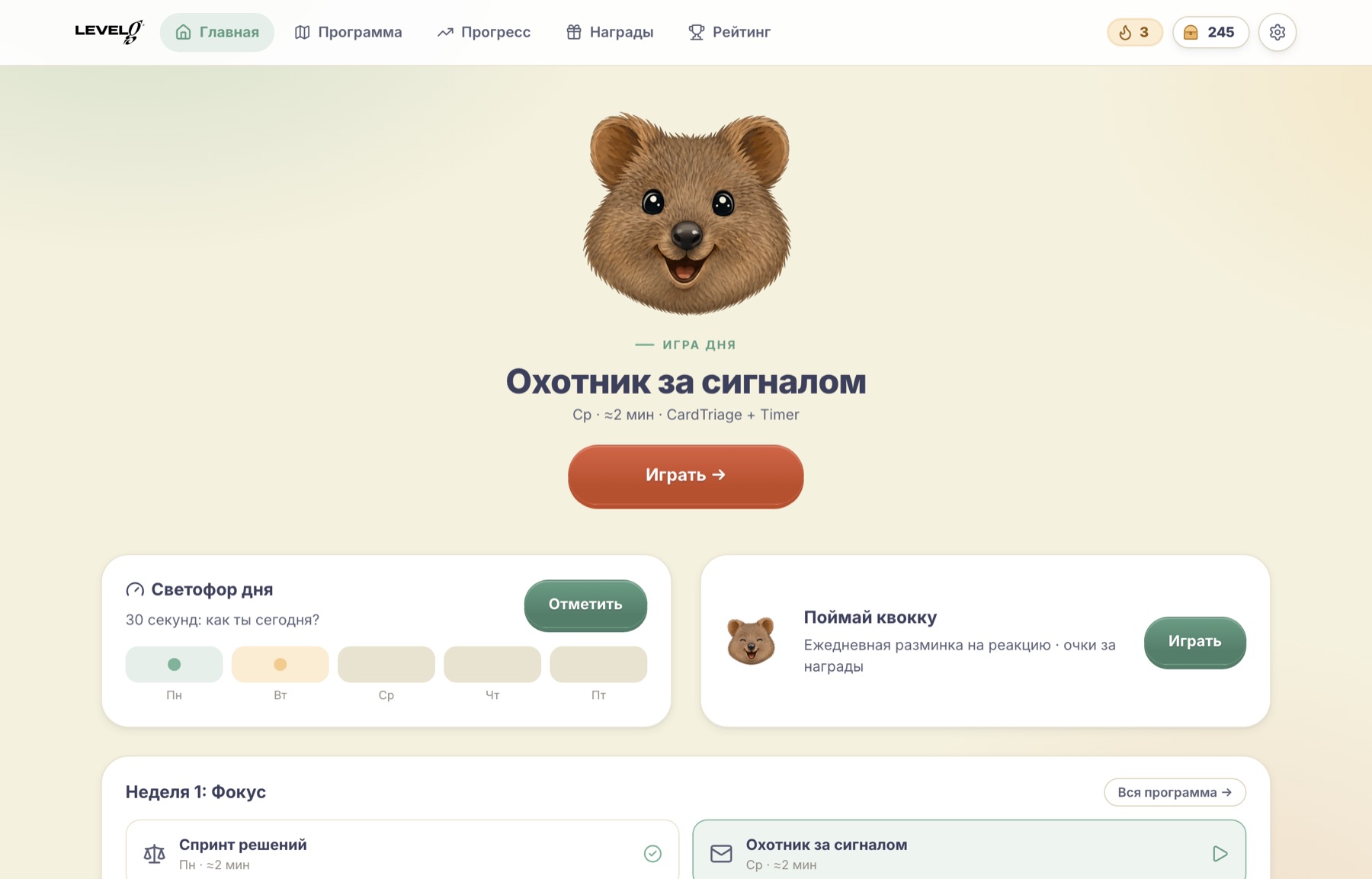
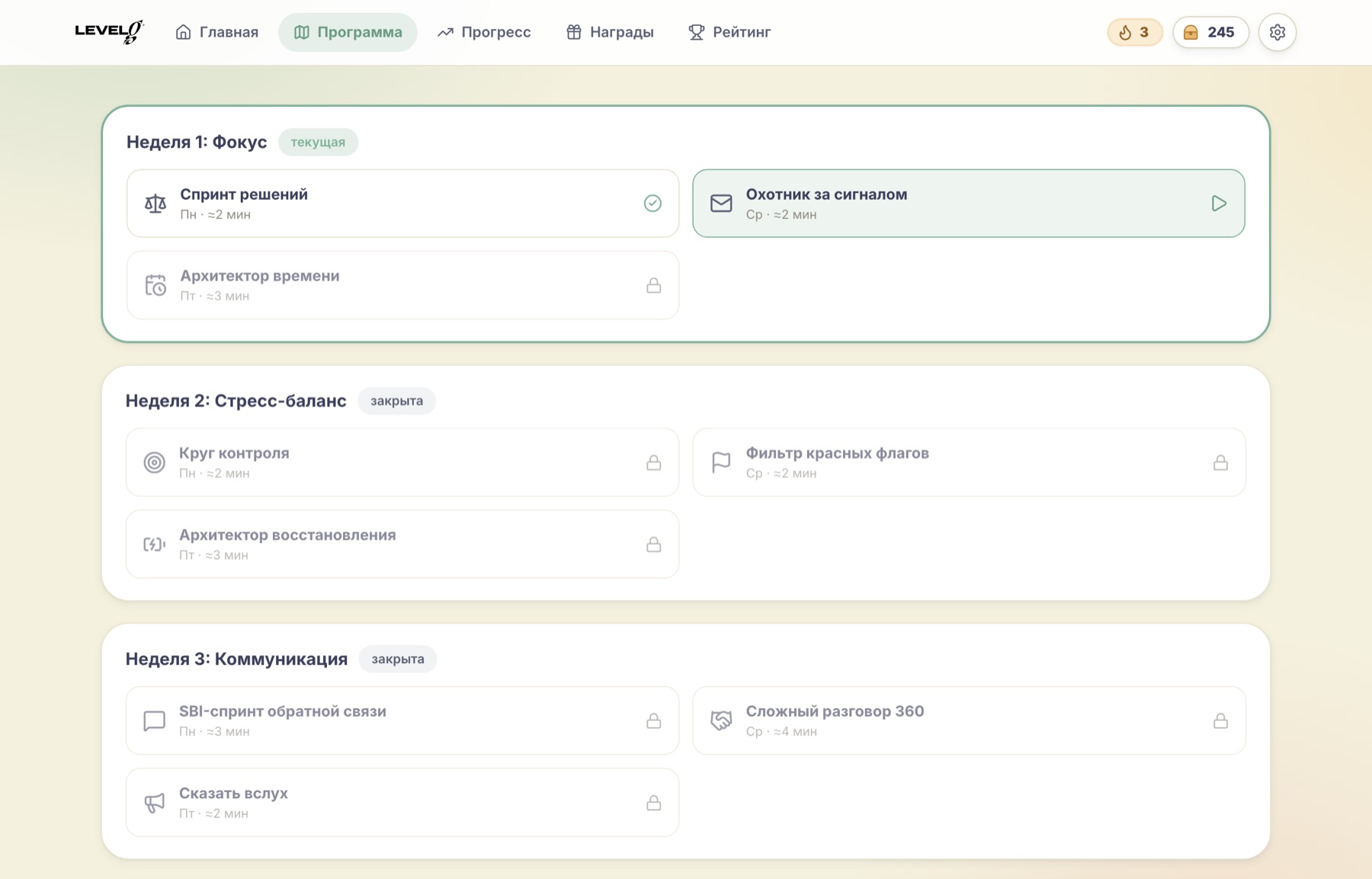
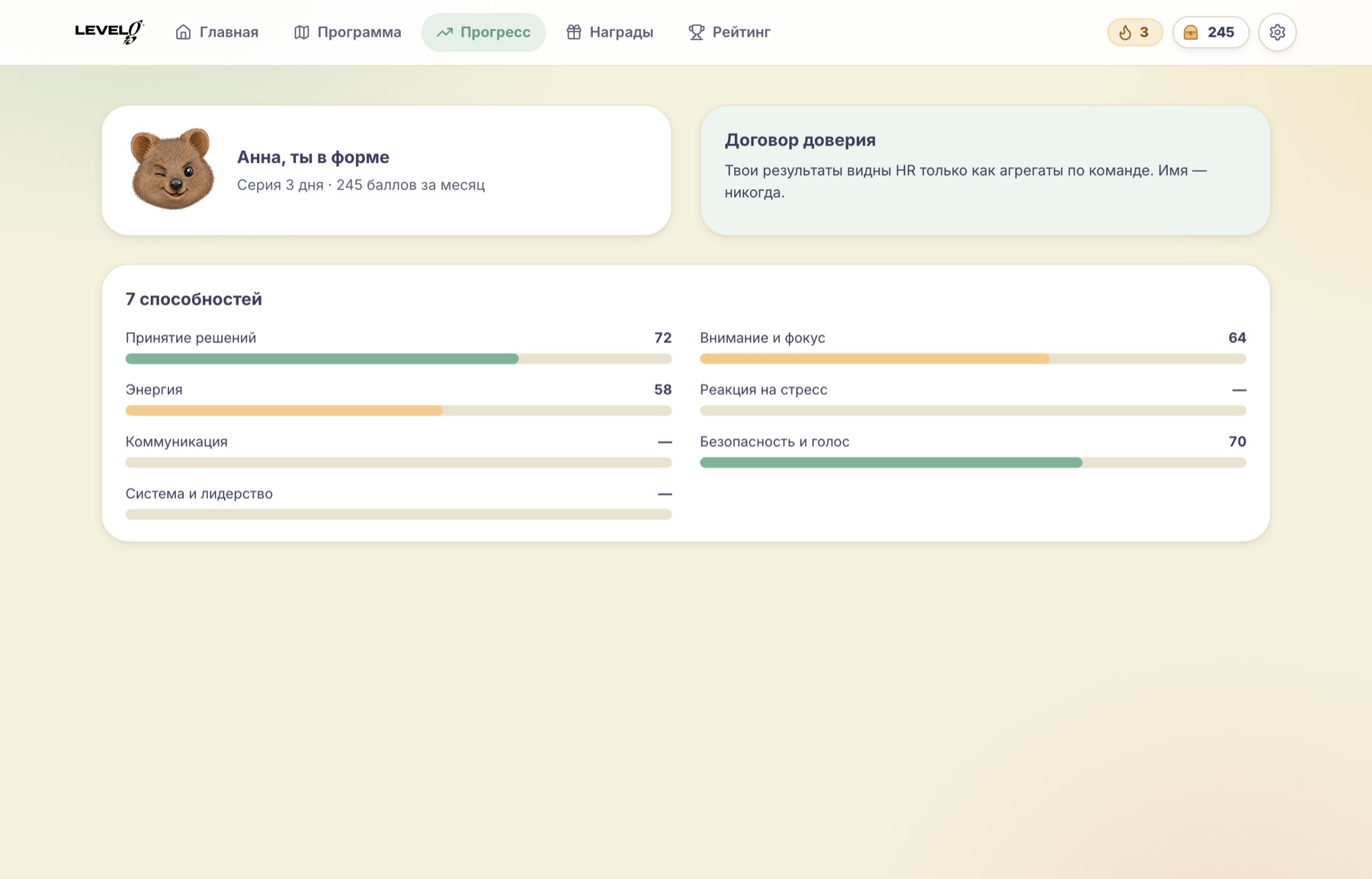
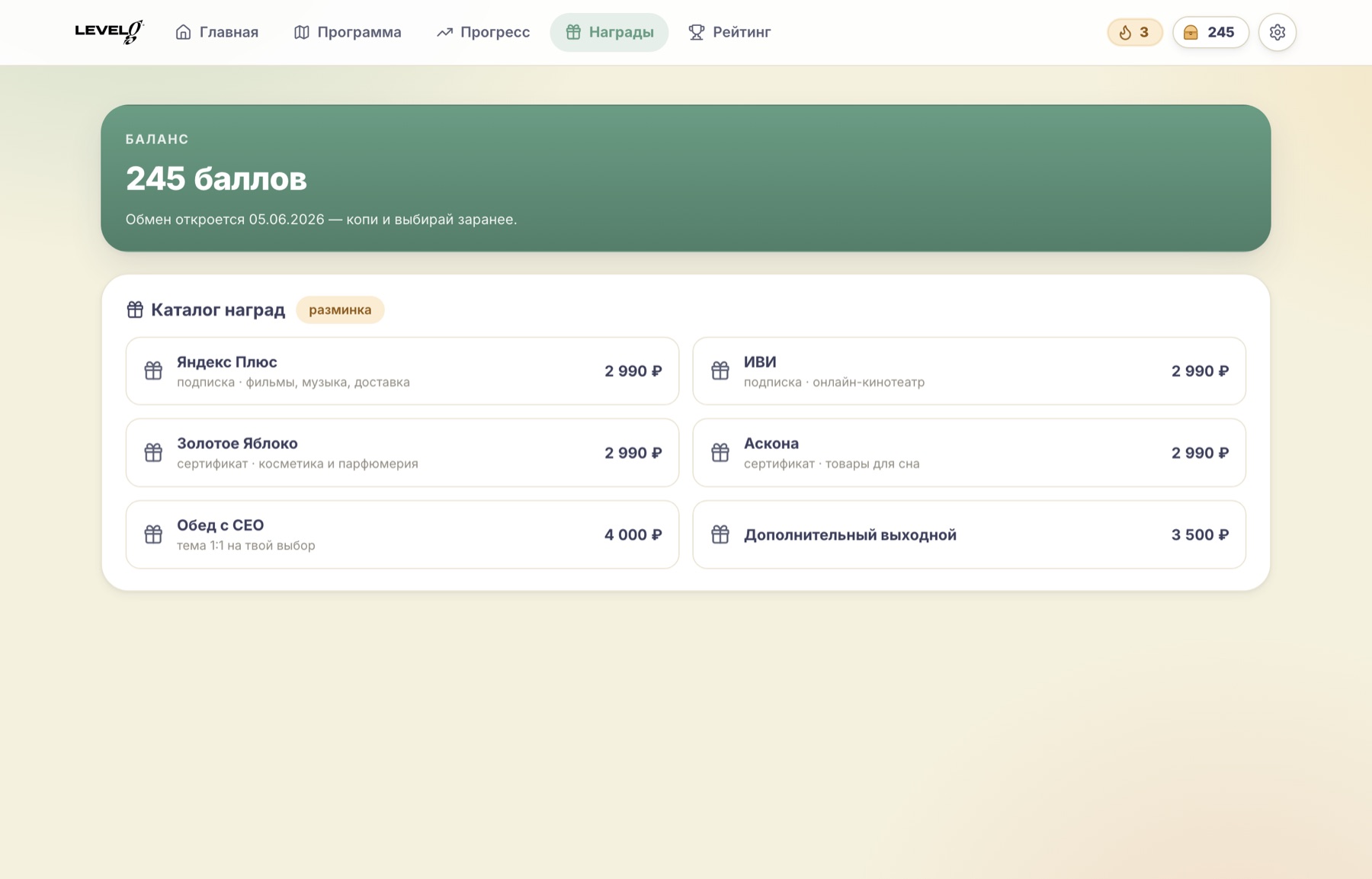
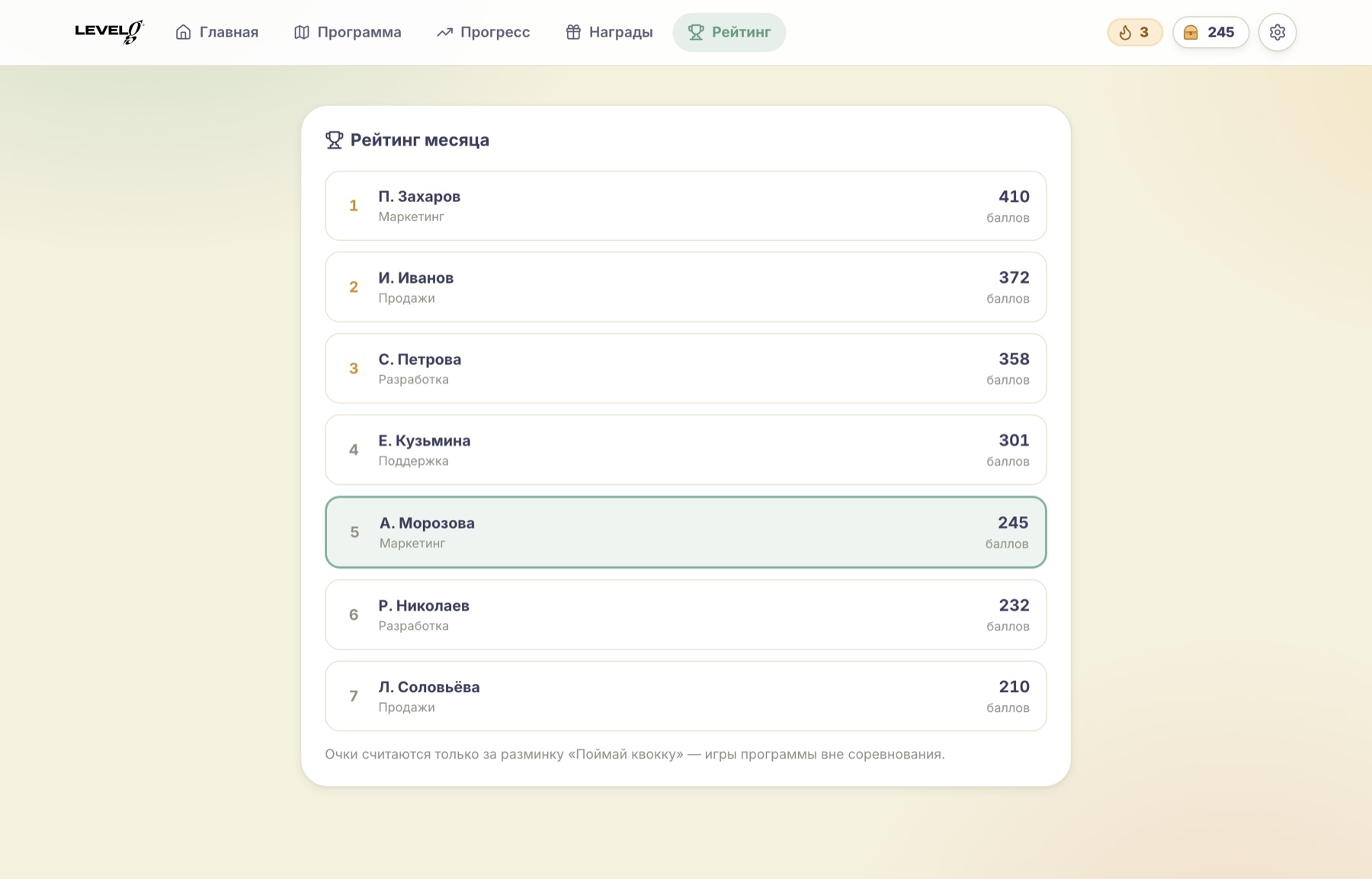
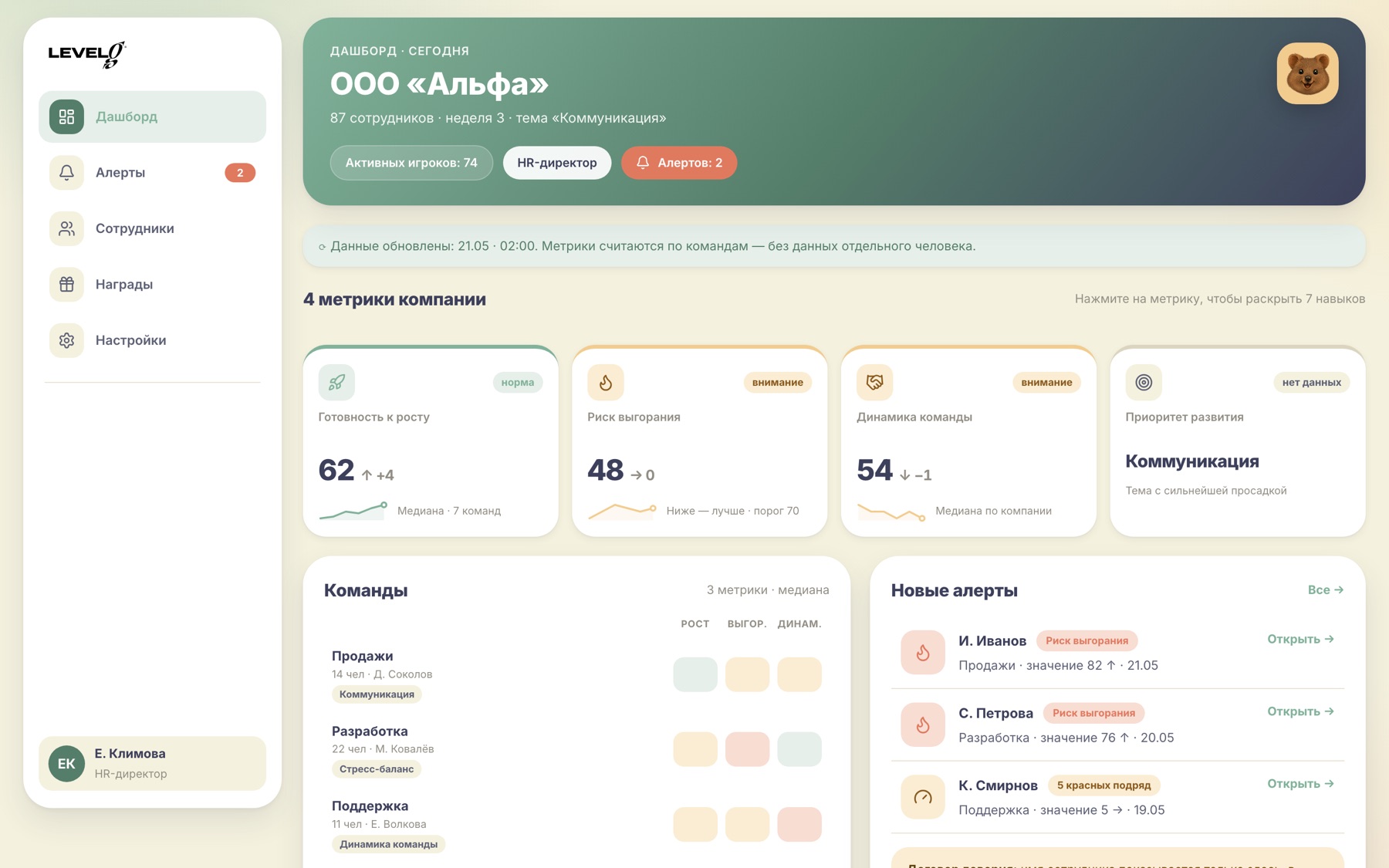
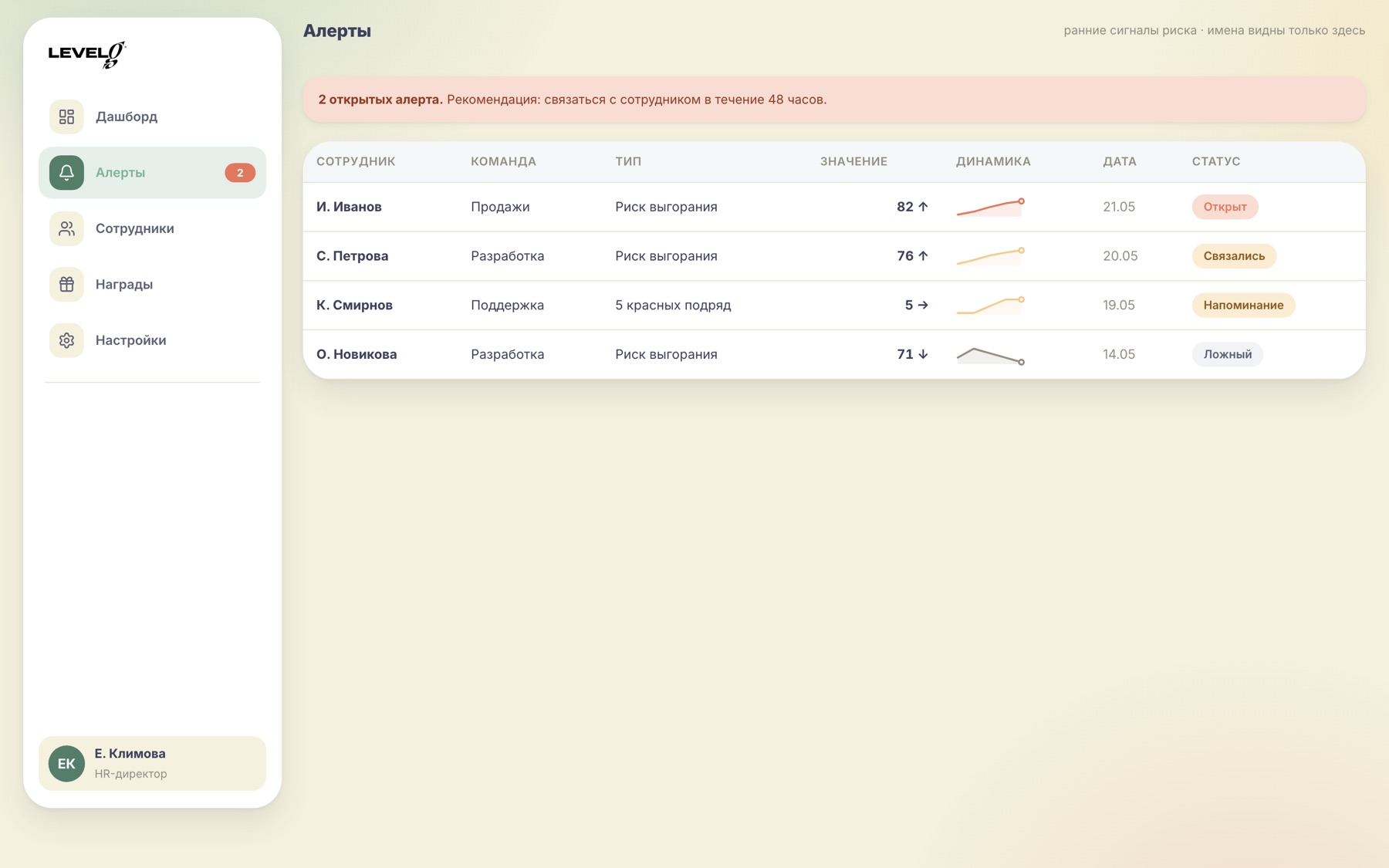
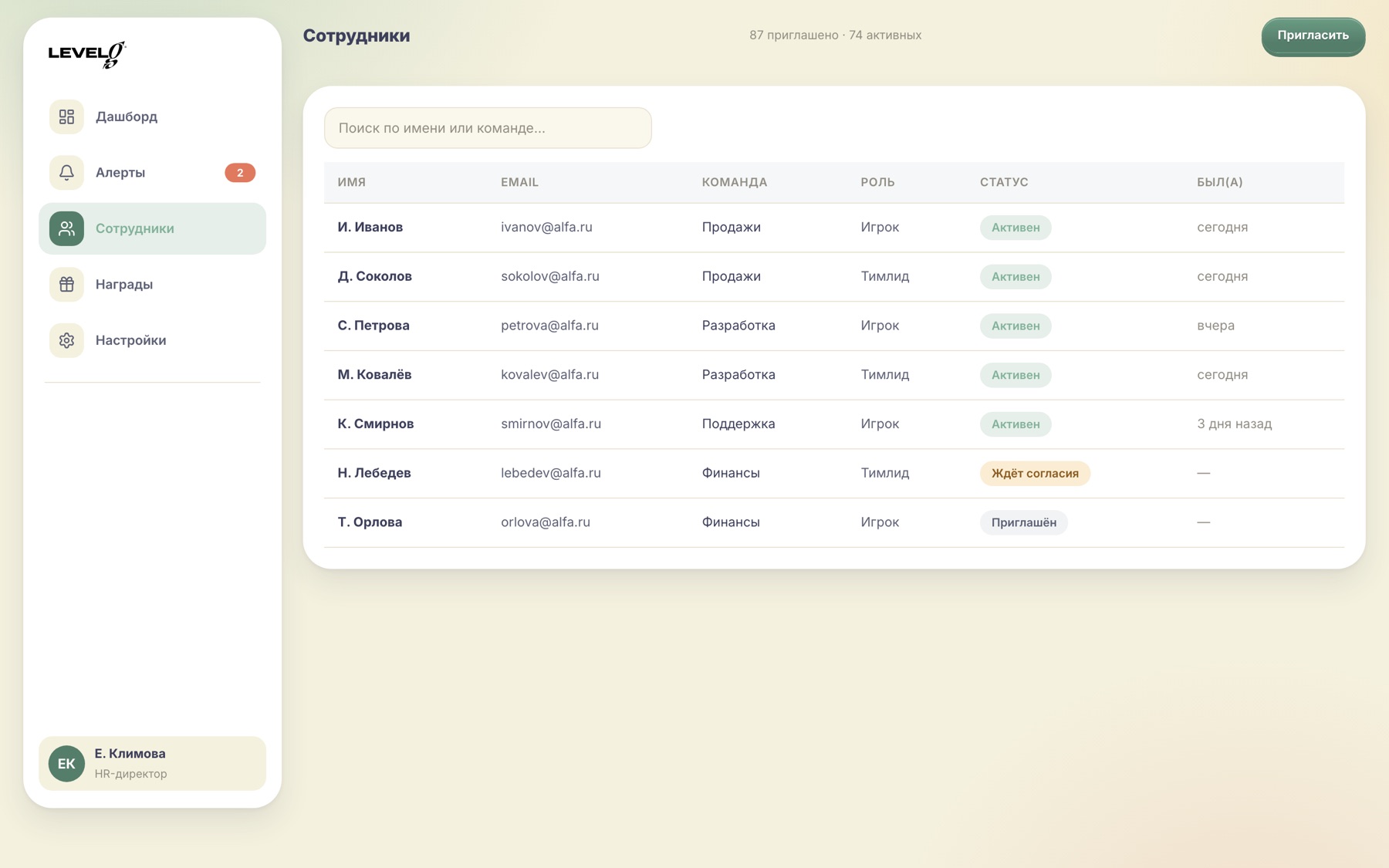
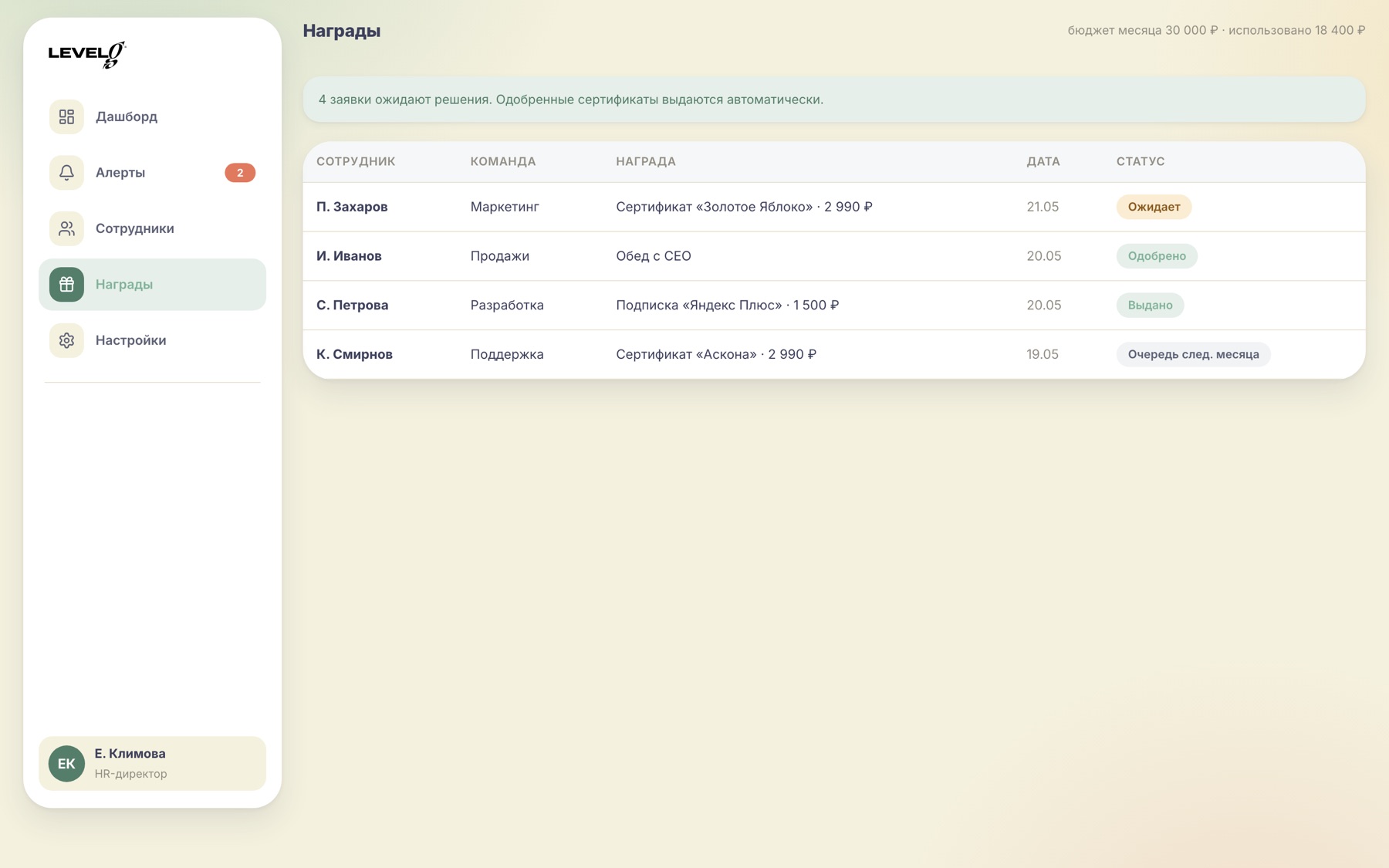
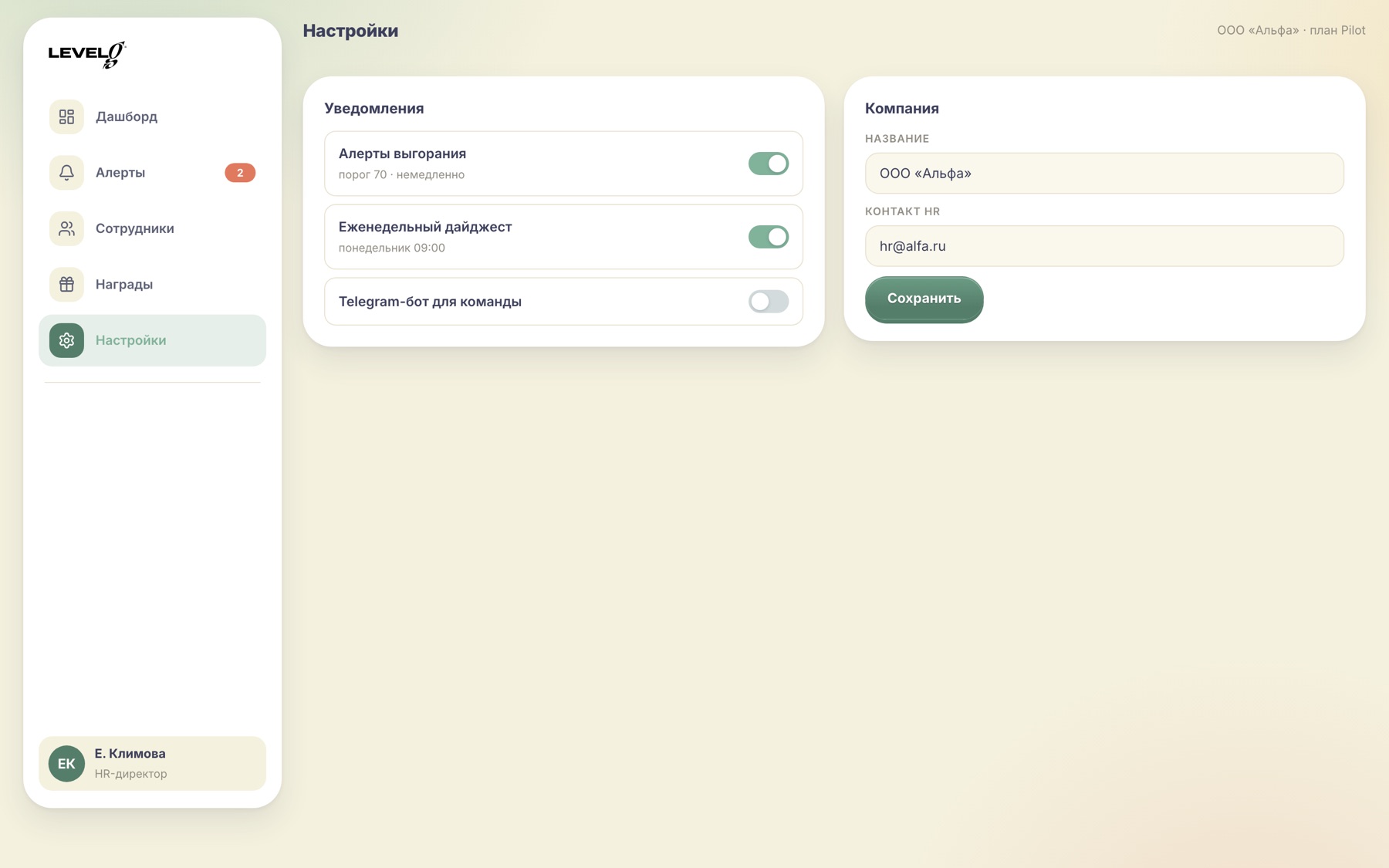
Employee app
HR dashboard

Yes, there is a quokka on the dashboard. It is the happiest-looking animal on earth and it has no opinion about your quarterly numbers. That is exactly why it is there: two minutes a day only works if opening the app feels like nothing at all.
This is about growth.
Not surveillance.
People open the app to play and to look after themselves — not to file a report on themselves. That is precisely why the signal is honest. Break the contract and the measurement stops working.
What HR sees
- Team aggregates: median, spread, outliers
- Five HR scores and seven abilities, per team
- Trends over time and against benchmark
- A named alert in one narrow case only
What HR never sees
- An individual's answers inside a game
- One person's traffic-light history
- Free text an employee wrote
- A personal progress timeline
The employee's name appears in exactly one place: the alert. Everywhere else, for everyone else, it is an aggregate. Burnout Risk ≥ 70, or five consecutive red days
Four layers, no black box. Every weight is published.
Twenty-five facts.
Seven abilities. Five decisions.
Nothing here is a proprietary index you have to take on faith. Each layer is a published formula over the layer beneath it, and you can walk all the way down from a score to the single answer that moved it.
Layer 1
25
Facts
Raw metrics produced directly by games — accuracy rates, choice types, timing.
Layer 2
7
Abilities
Weighted clusters of facts. This is where growth and gaps become legible.
Layer 3
5
HR scores
The five questions an HR director actually has to answer this quarter.
| HR score | The question it answers | Built from | Zone at 70+ |
|---|---|---|---|
| Succession Readiness | Who is ready for the next step? | Leadership · Decisions · Communication · Stress | Strong |
| Burnout Risk | Who is running out of road? | Energy · Stress · Attention, inverted | High risk |
| Turnover Risk | Who might leave? | Safety & Voice · Burnout · Communication | High risk |
| Team Dynamics | Where is the friction? | Safety & Voice · Communication · Stress | Strong |
| Development Priority | Where does L&D money go? | Largest gap against the role profile | n/a |
Not every company needs all thirteen games.
Configure the package around the problem you actually have.
Pick a goal — catch burnout early, build a leadership bench, fix how the team talks — and the configurator shows you, live, which abilities that package can measure, which HR scores it unlocks, and which ones stay locked until you add one more game.
Example · “Catch burnout early”
- 6 games · 2 weeks · 14 min per player, per weekSelected
- Energy · Stress Response · AttentionFull
- Burnout RiskAvailable
- Turnover RiskPreliminary
- Succession ReadinessLocked
Locked is not a paywall — it means the maths cannot honestly produce that number from the games you picked.
Thirteen games plus the daily check-in, on five reusable engines.
Games people actually open.
Every one is a real workplace situation with an ambiguous right answer. The score comes from what the player does, not from what they say about themselves.
- Decision SprintWeek 1 · Decisions
- Signal HunterWeek 1 · Attention
- Time ArchitectWeek 1 · Energy
- Control CircleWeek 2 · Stress
- Red Flag FilterWeek 2 · Stress
- Recovery ArchitectWeek 2 · Energy
- SBI Feedback SprintWeek 3 · Communication
- Difficult Conversation 360Week 3 · Communication
- Can You Say This Out Loud?Week 3 · Safety
- Is It Safe to Say?Week 4 · Safety
- Go LookWeek 4 · Leadership
- Leadership WeekWeek 4 · Leadership
- Assemble Team in 90 SecondsWeek 4 · Engagement
- Traffic Light Check-inDaily routine
Not another toy.
Four settled findings.
Level Game did not invent a theory of burnout. It operationalises four that the field already agrees on.
The full reading list-
Maslach Burnout Inventory
Maslach & Jackson, 1981 · Maslach & Leiter, 2016
Burnout is a measurable syndrome with named dimensions — not a vague feeling you either have or do not.
-
Social desirability bias
Edwards, 1957 · review: Bursztyn, Haaland, Röver
Direct questionnaires are systematically distorted toward the answer the respondent thinks is wanted.
-
Experience sampling method
Csikszentmihalyi & Larson, 1987
Frequent small measurements beat rare large ones — recall error is the dominant term in a quarterly survey.
-
Self-determination theory
Deci & Ryan, 1985, 2000 · Gagné & Deci, 2005
Autonomy, competence and relatedness are what make a daily habit stick without coercion.
One subscription.
The whole team.
Built for companies of 50 to 500 people. Web app and a Telegram bot, rewards included, no per-reward invoicing.
Hiring, onboarding, lost team pace
At the published Team tier, for a 60-person company
Up to three games a week, plus a one-minute daily traffic light
One retained employee pays for a year of the subscription several times over. That is the whole business case, and it is the one we will run against your own numbers on the call.
See the dip
before it becomes a resignation.
Leave a work email. In fifteen minutes we will run the product on your team's scenario — not a slide deck — and show you what your first month would look like.
We take a limited number of companies in each onboarding wave.